
Soozier adjustable dumbbells are designed around versatility and efficient use of space. The 6-in-1 system can be configured for dumbbell, barbell, kettlebell, and push-up exercises, allowing one set to cover many common strength-training movements. Removable weight plates make it possible to change resistance as training progresses, while PVC-coated, sand-filled plates help reduce noise and are less likely to damage floors than exposed metal weights. Available configurations include 44, 55, and 66 lb sets, providing different starting points for home strength training.
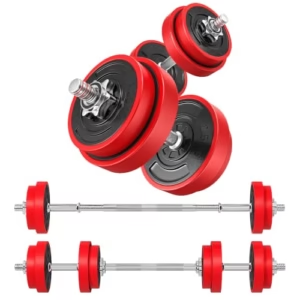
Soozier 2-in-1 Adjustable Dumbbell and Barbell Set, Red Wine
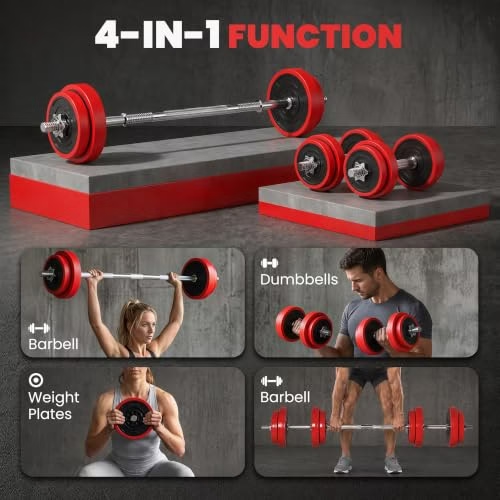
This adjustable weight set converts between two dumbbells and a barbell using a connecting bar. Removable plates, textured handles, and retaining nuts support different exercise setups, while plastic plate edges help protect flooring when setting weights down.
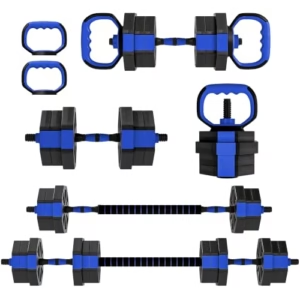
Soozier 6-in-1 Adjustable Dumbbell Set, 44 lb, Blue
This adjustable weight set supports dumbbell, barbell, kettlebell, and push-up stand configurations for home workouts. Twelve interchangeable plates, textured handles, and spinlock collars allow weight adjustments and changes between exercises.
Soozier 2-in-1 Adjustable Dumbbell and Barbell Set, Red Wine
Description
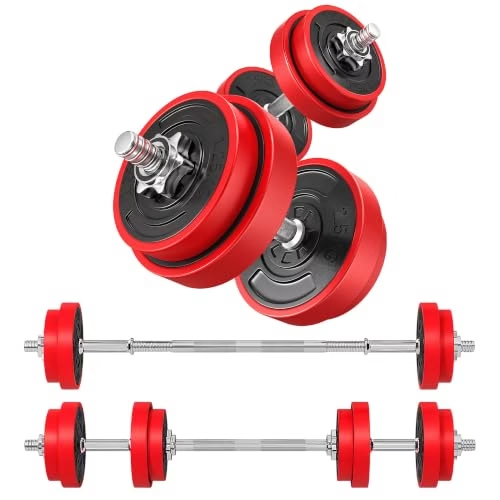
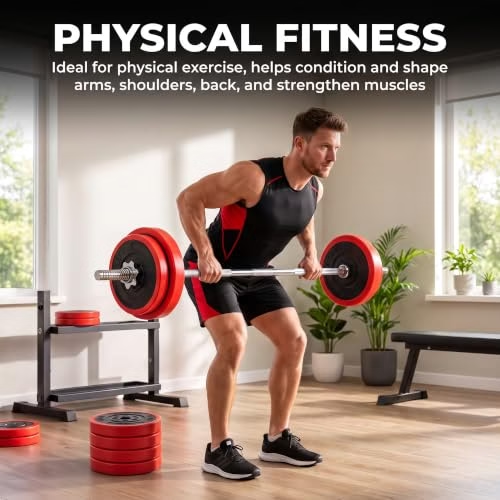
The Soozier 2-in-1 adjustable weight set provides two dumbbells or a connected barbell for home strength training. A separate connecting bar joins the short bars, allowing you to change between individual dumbbell exercises and movements that use a single barbell.
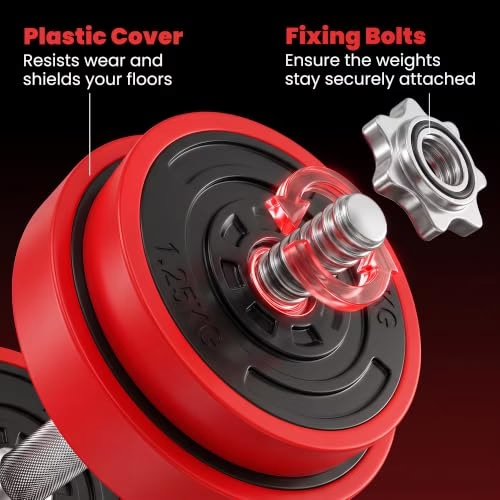
Removable plates allow the load to be adjusted for different exercises. Four retaining nuts hold the plates on the bars, while textured gripping surfaces help maintain your hold during lifting. The set also includes a chromed dumbbell connector for assembling the barbell configuration.
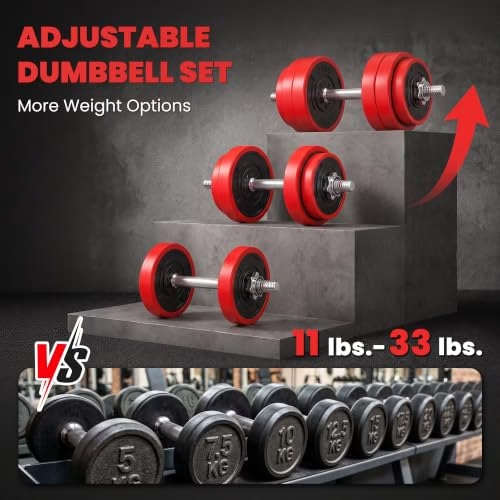
Plastic edges on the plates help reduce direct contact with flooring when the weights are set down. The listing identifies this as a 44 lb set, but its individual plate quantities and component weights do not match that total. Confirm the included weights before using the listed figures to plan your training loads.
Features
- Converts between two separate dumbbells and a barbell using the included connector
- Removable weight plates allow load adjustments to suit different exercises
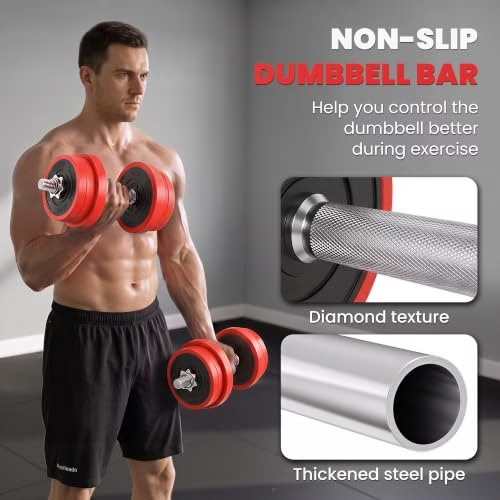
- Textured handles help maintain grip while lifting the dumbbells or barbell
- Four retaining nuts hold the weight plates on the short bars
- Plastic plate edges help protect flooring when setting the weights down
Specifications
- Brand
- Soozier
- Model
- USA91-1550131
- Product Type
- Adjustable dumbbell and barbell set
- Color
- Red Wine
- Configuration
- Two dumbbells or one barbell
- Advertised Set Weight
- 44 lbs
- Connector Finish
- Chrome
- Plate Edges
- Plastic
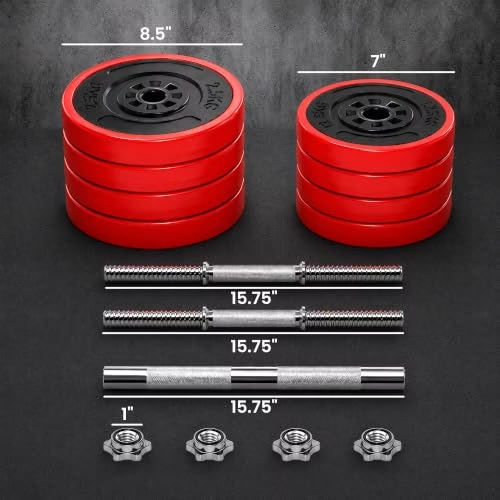
- 3 lb Plate Dimensions
- 7" × 1.25" thick
- 6 lb Plate Dimensions
- 8.5" × 1.5" thick
- Short Bar Dimensions
- 1" diameter × 17.75" L
- Connecting Bar Dimensions
- 1" diameter × 15.75" L
- Included Components
- Weight plates, 2 short bars, 4 retaining nuts, 1 connecting bar
Soozier 6-in-1 Adjustable Dumbbell Set, 44 lb, Blue
Description
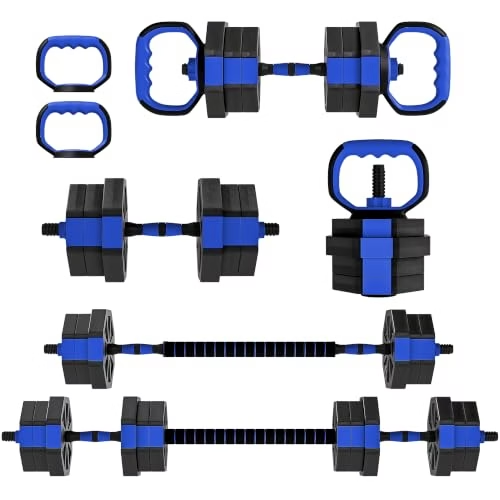
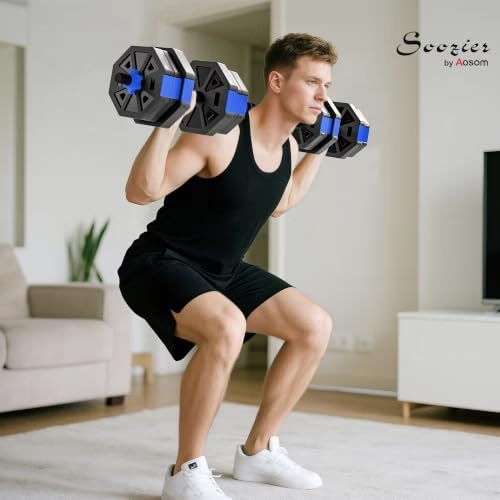
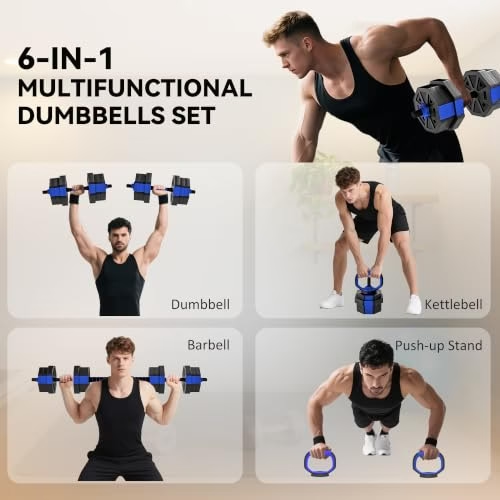
The Soozier adjustable dumbbell set combines several strength-training formats in one set for home use. It can be assembled into dumbbell, barbell, kettlebell, and push-up stand configurations, providing options for different exercises without storing separate sets of equipment.
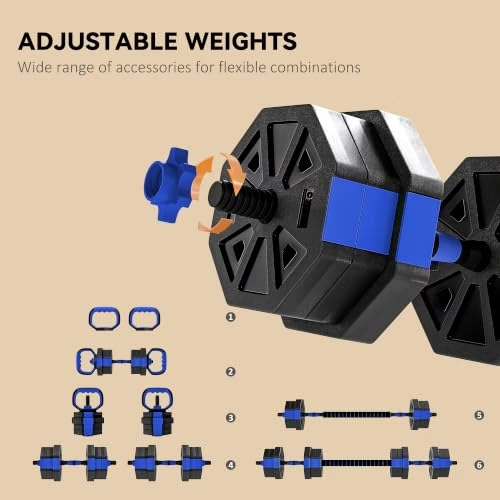
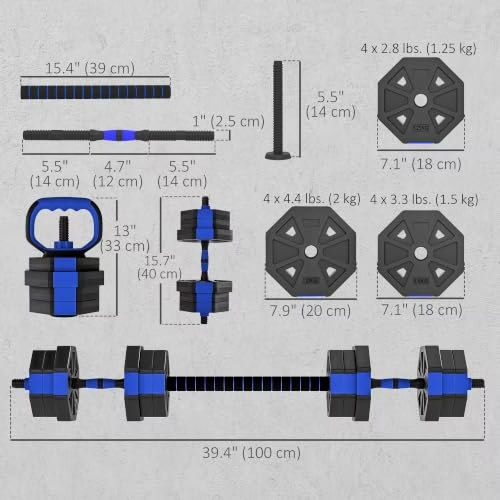
The set includes 12 weight plates: four 4 lb plates, four 3.3 lb plates, and four 2.8 lb plates. Marked weights make it easier to select plates and adjust the load between exercises. This arrangement allows smaller changes in resistance as training needs develop.
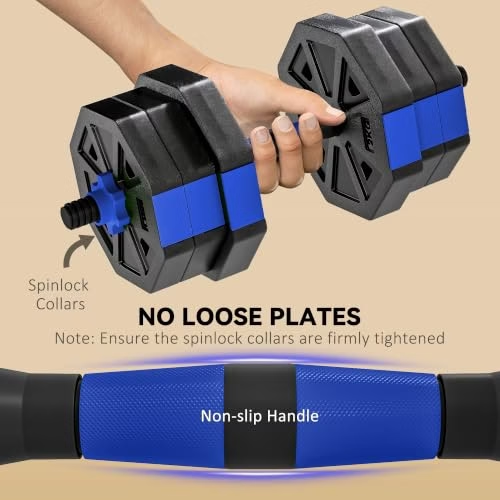
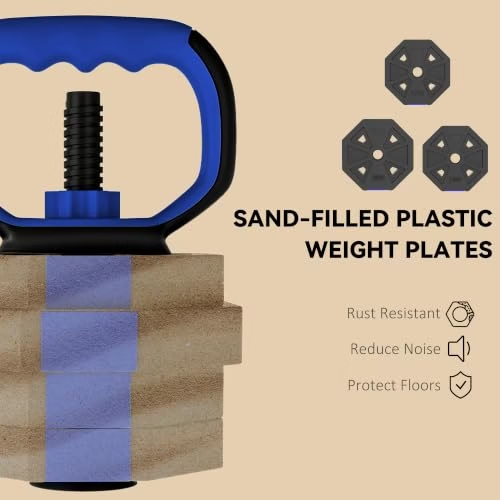
The sand-filled plates have a PVC coating intended to limit noise and direct contact between hard weights and flooring. Textured handles provide grip during use, while six spinlock collars hold the plates in place. The components can be disassembled for storage in an apartment or home gym with limited space.
Features
- Supports dumbbell, barbell, kettlebell, and push-up stand configurations for varied home workouts
- Twelve interchangeable plates allow resistance adjustments for different exercises and training levels
- Clearly marked plate weights help simplify load selection when changing exercises
- Textured handles provide grip during lifting and push-up stand use
- PVC-coated, sand-filled plates help reduce noise and contact with hard flooring
- Six spinlock collars secure plates and allow disassembly for compact storage
Specifications
- Brand
- Soozier
- Model
- A91-414V01BU
- Product Type
- Adjustable weight set
- Color
- Blue
- Size
- 44 lbs
- Plate Material
- PVC coating with sand filling
- Plate Quantity
- 12
- Plate Weights
- 4 × 4 lb; 4 × 3.3 lb; 4 × 2.8 lb
- 4 lb Plate Dimensions
- 7.7" L × 7.1" W × 1.6" H (19.5 × 18 × 4 cm)
- 3.3 lb Plate Dimensions
- 7.1" L × 6.5" W × 1.4" H (18 × 16.5 × 3.5 cm)
- 2.8 lb Plate Dimensions
- 6.5" L × 5.9" W × 1.4" H (16 × 15 × 3.5 cm)
- Collar Type
- Spinlock
- Collar Quantity
- 6
How to Use Soozier Adjustable Dumbbells
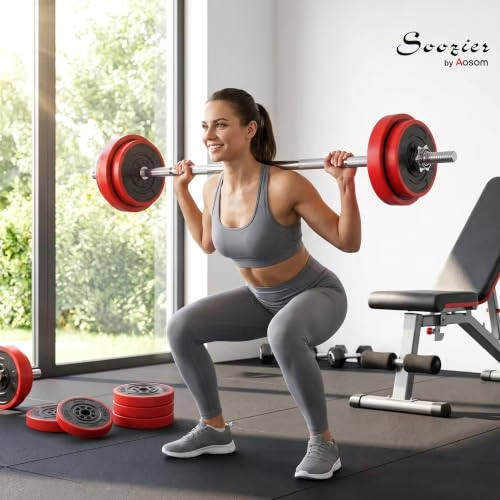
The main advantage of an adjustable set is not simply having several weight options. It is the ability to use different resistance for different movements. Exercises for the shoulders and arms will usually require less weight than squats, deadlifts, or other lower-body movements. Instead of trying to complete an entire workout at one setting, adjust the plates according to the exercise and your ability to maintain controlled technique.
Before each workout, check that the selected plates are installed evenly and that the spinlock collars are fully secured. When converting the equipment between dumbbell, barbell, kettlebell, and push-up configurations, assemble it on a stable floor and check each connection before applying body weight or beginning an exercise.
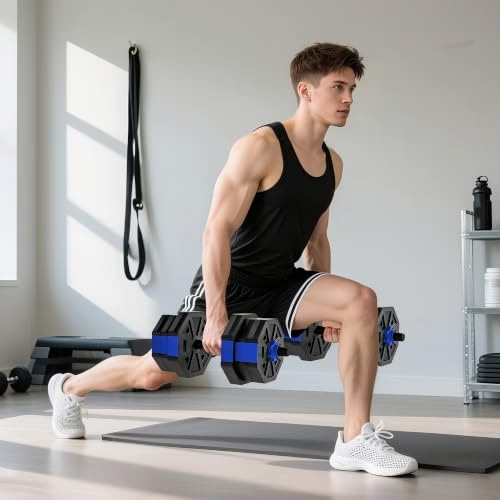
For beginners, a simple full-body program two or three times per week is a practical starting point. A session can combine squats or lunges for the legs, dumbbell or barbell rows for the back, floor presses or push-ups for the chest, overhead presses for the shoulders, followed by curls or triceps exercises. Start with a resistance that allows approximately 8–12 controlled repetitions without losing form. As that range becomes consistently easy, resistance can be increased gradually.
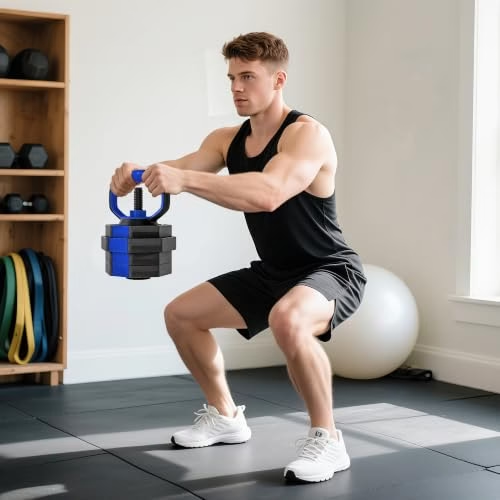
The kettlebell configuration can add movements such as goblet squats, carries, and other controlled functional exercises. More dynamic exercises such as kettlebell swings require appropriate technique and enough clear space around the user. The push-up stand configuration can provide a more neutral hand position and additional exercise variety without requiring another piece of equipment.
For general fitness rather than maximum strength, the set also works well for circuit training. Choose several movements covering the upper body, lower body, and core, perform them in sequence, and keep rest periods relatively short. For strength-focused sessions, use heavier resistance where appropriate and allow longer recovery between sets.
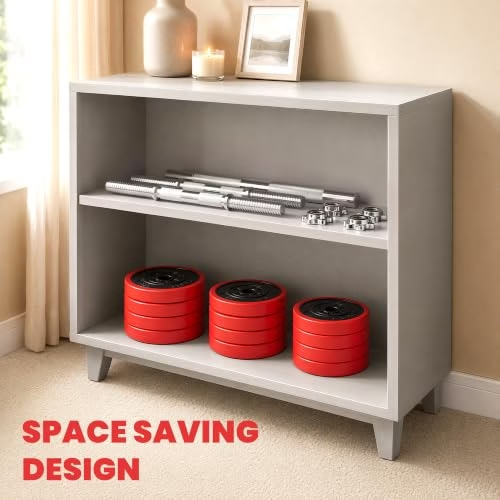
Compact storage is particularly useful in apartments and multipurpose rooms. After training, the system can be disassembled rather than leaving a full barbell setup or several pairs of fixed dumbbells on the floor. Store the plates and connectors in a dry area, periodically inspect the collars and handles, and avoid dropping the sand-filled PVC plates.
Build More Movement Into Your Routine
A lack of space and equipment can make regular strength training harder to maintain at home. Soozier adjustable dumbbells address that problem by putting several common types of strength equipment into one configurable set. They can support short workouts on busy days, progressive resistance training as strength improves, and a broad range of exercises without requiring a dedicated home gym. The result is a practical way to make strength work a regular part of a more active lifestyle rather than something that depends on having access to a fully equipped gym.
What Can You Train with the Soozier 6-in-1 Adjustable Dumbbell Set?
| Your Goal | Best Setups to Use | Good Beginner Exercises | Suggested Starting Approach | What You Can Develop |
|---|---|---|---|---|
| General fitness | Dumbbells + barbell | Squats, rows, floor press, overhead press | 2–3 workouts/week, 8–12 reps | Full-body strength, coordination and everyday fitness |
| Build upper-body strength | Dumbbells + push-up stands | Rows, floor press, shoulder press, curls, triceps extensions, push-ups | Choose a weight that allows 8–12 controlled reps | Chest, back, shoulders and arms |
| Strengthen legs & glutes | Barbell + kettlebell | Squats, Romanian deadlifts, lunges, goblet squats | Legs can usually handle more resistance than arms; increase gradually | Quads, hamstrings, glutes and hip strength |
| Lose weight / become more active | Dumbbells + kettlebell | Squat-to-press, carries, lunges, rows, controlled circuits | 10–15 reps with shorter rests; combine with walking or other cardio | Higher activity level, muscular endurance and calorie expenditure |
| Improve muscle definition | Dumbbells + barbell | Presses, rows, squats, curls, lateral raises | 8–15 reps; gradually add resistance or repetitions | Muscle development and improved body composition when combined with appropriate nutrition |
| Start exercising after a long break | Light dumbbell setup | Goblet squat, supported row, floor press, light curls | Begin with the lightest practical configuration and 1–2 sets | Basic strength and gradual adaptation to resistance exercise |
| Home circuit training | Dumbbells + kettlebell + push-up stands | Squats → rows → push-ups → lunges → carries | 5–6 exercises, 8–15 reps each, 2–4 rounds | Whole-body conditioning and muscular endurance |
| Progress toward heavier strength training | Dumbbells + barbell | Squats, deadlift variations, rows, presses | Start around 10–12 reps; add weight when all reps remain controlled | Progressive strength and preparation for more advanced resistance training |
Beginner tip: body weight, height, and sex alone should not determine the correct resistance. A better test is the final 2–3 repetitions of a set: they should feel noticeably harder, but you should still be able to complete them with controlled movement and good form. If technique begins to break down, reduce the weight.