
Boxing training combines cardiovascular exercise with coordination, speed, balance, and repeated upper- and lower-body movement. Soozier boxing equipment provides several ways to bring this style of training into a home gym, whether the goal is a full striking workout, speed and rhythm practice, or simply a more engaging alternative to conventional cardio.
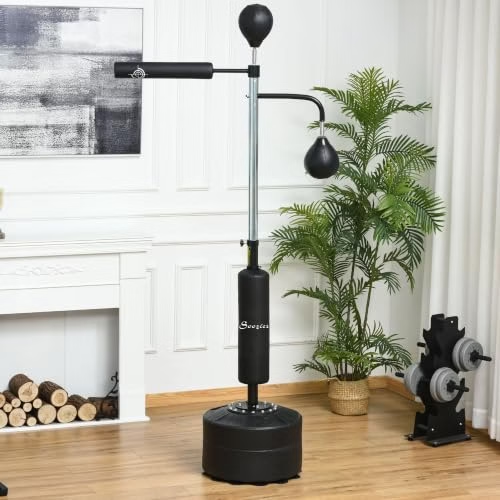
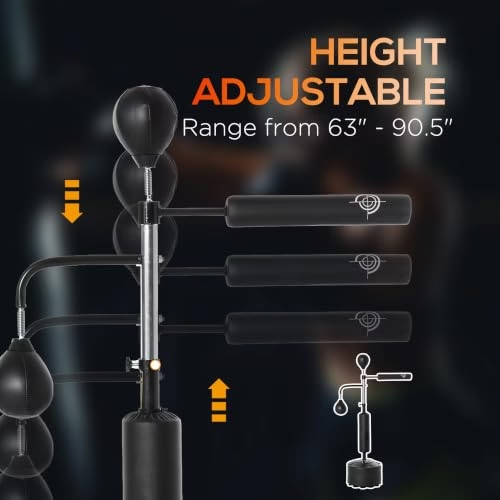
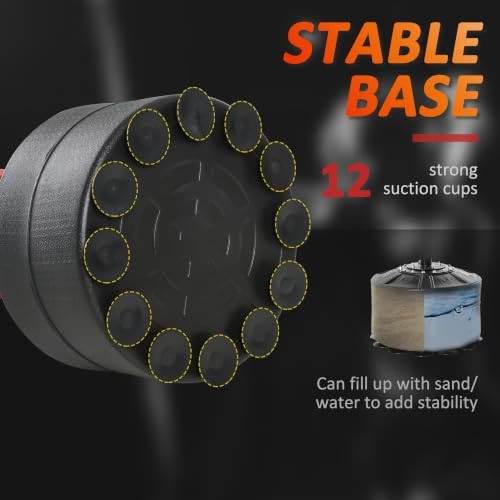
The Soozier 4-in-1 freestanding punching bag is the most versatile option in the range. It combines a PU-wrapped striking bag, two speed balls, and a 360-degree reflex bar in a single station. Its height adjusts from 63 to 90.6 inches, allowing the striking elements to be positioned for different users. The base can hold up to 99 lb of sand, 66 lb of water, or 88 lb of a sand-and-water mixture, with 12 suction cups providing additional stability on compatible smooth surfaces.
More focused practice is possible with the Soozier wall-mounted speed bag. Its height-adjustable steel platform takes up relatively little floor space and is intended for repeated speed-bag drills that emphasize rhythm, accuracy, shoulder endurance, and hand-eye coordination.
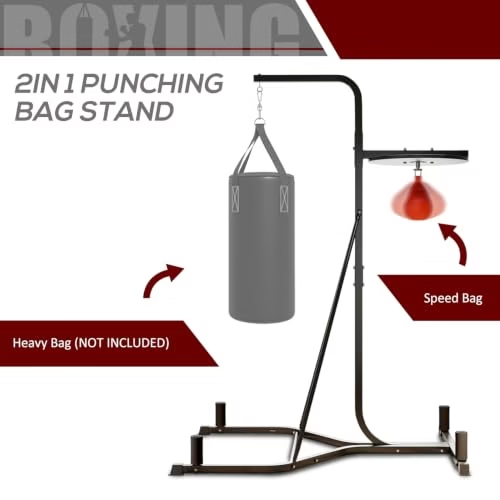
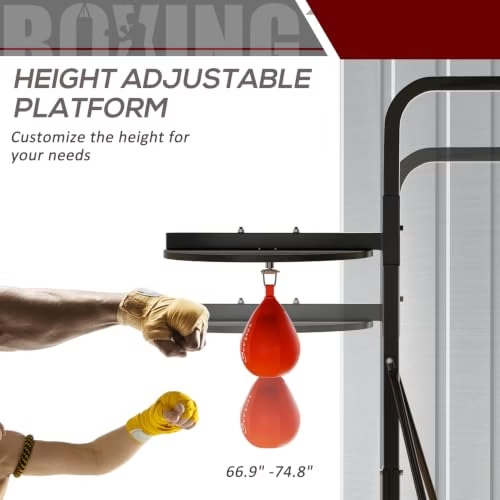
The Soozier 2-in-1 punching bag stand provides another option for a more conventional home boxing setup. It accommodates speed-bag work as well as a separate heavy bag and adjusts from approximately 66.9 to 74.8 inches. Weight plates can be added to the base for stability, allowing users to build their own striking station around the stand.
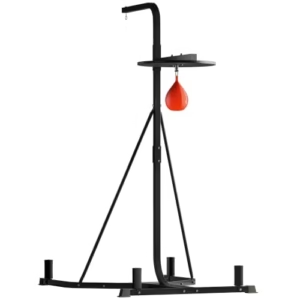
Soozier 2-in-1 Punching Bag Stand with Weight Plate Posts, Black
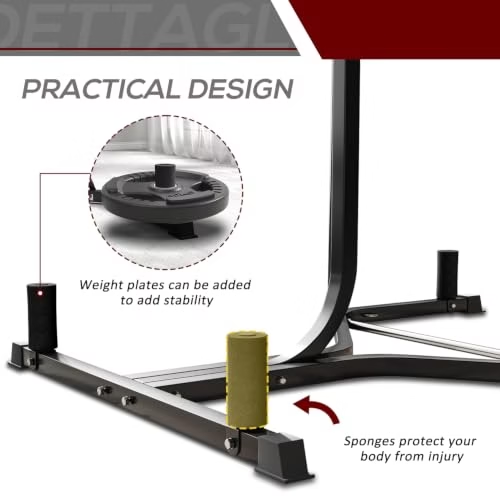
This boxing stand supports heavy-bag and speed-bag training in one setup. Four base posts accommodate weight plates for added ballast, while an adjustable-height feature allows part of the training setup to be repositioned.

Soozier Wall-Mounted Speed Bag with Adjustable-Height Steel Platform
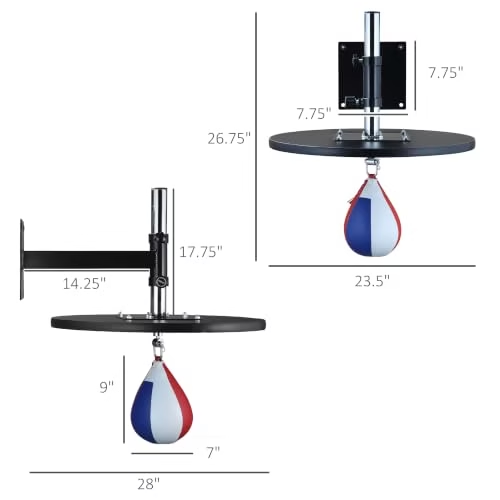
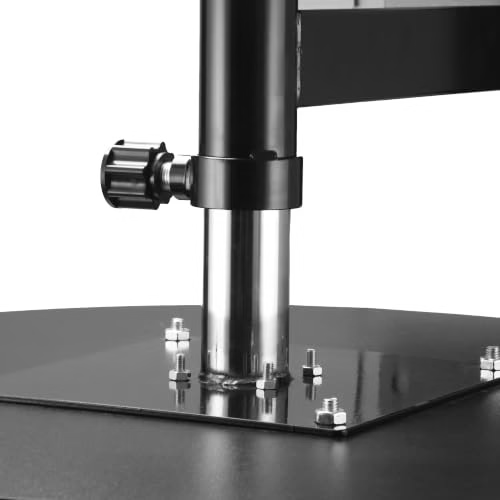
This wall-mounted speed bag provides a dedicated station for timing, punching rhythm, and hand-eye coordination drills. A twist knob adjusts the bag height, while the 23.5-inch platform keeps the setup off the floor.
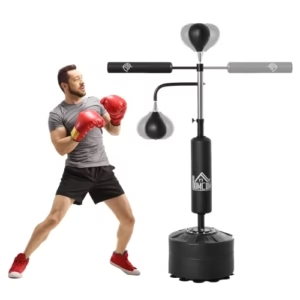
Soozier 4-in-1 Freestanding Punching Bag with Two Speedballs, Black
This freestanding boxing station combines two speedballs, a 360° reflex bar, and a PU-wrapped punching bag. Adjustable height and a fillable base with 12 suction cups support home practice focused on timing, punching accuracy, and coordination.
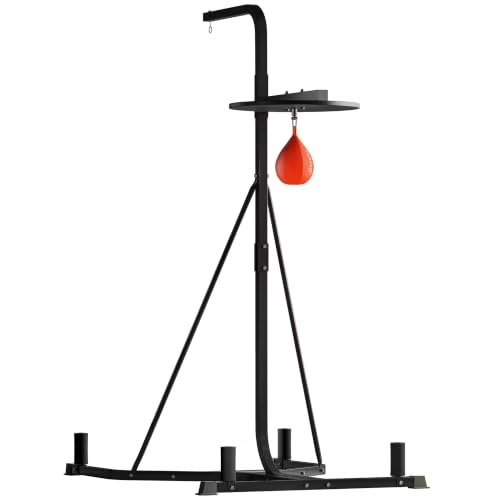
Soozier 2-in-1 Punching Bag Stand with Weight Plate Posts, Black
Description
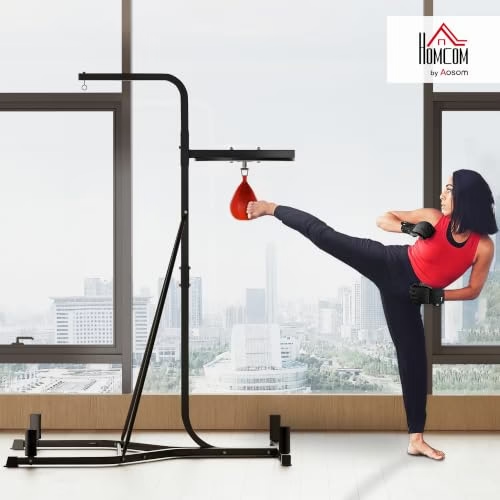
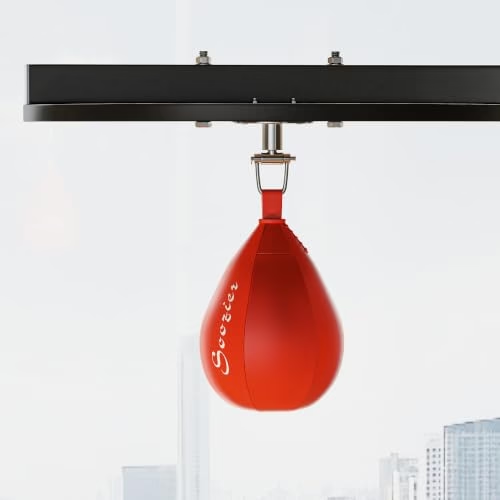
The Soozier 2-in-1 punching bag stand provides a setup for heavy-bag and speed-bag practice at home. The two training formats offer options for working on punching combinations, rhythm, and hand-eye coordination within one station.
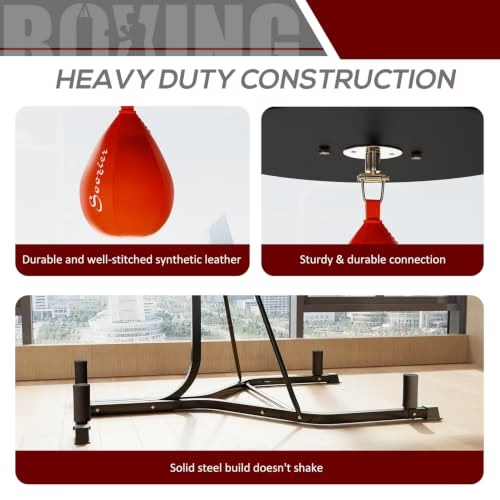
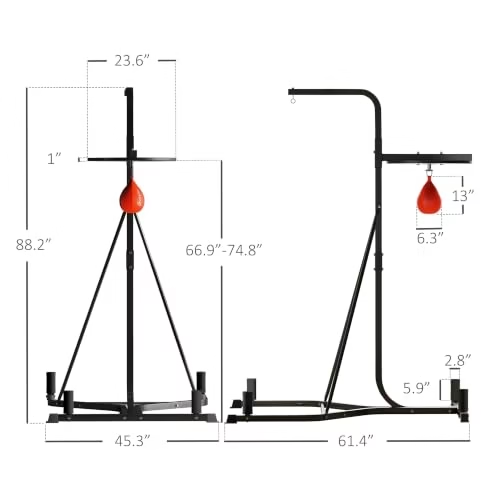
The base features four posts for weight plates, allowing ballast to be added to the stand. Weight plates are not included. The supplied listing does not specify the compatible plate hole size or the maximum supported bag weight, so these details need confirmation when selecting equipment.
An adjustment range of 66.9 to 74.8 inches is listed, although the source does not identify which component adjusts. The stated overall height is 88.2 inches. Speedball dimensions are given as 6.3 inches in diameter by 13 inches high, but the supplied information does not clearly confirm whether either bag is included.
Features
- Two-in-one design supports both heavy-bag and speed-bag training formats
- Four base posts accommodate weight plates to add ballast during use
- Listed height adjustment provides options for repositioning part of the training setup
- Combined station allows varied punching drills within one home workout area
Specifications
- Brand
- Soozier
- Model
- A91-116V01BK
- Product Type
- Heavy-bag and speed-bag stand
- Color
- Black
- Overall Height
- 88.2"
- Listed Adjustment Range
- 66.9"–74.8" (component unspecified)
- Speedball Dimensions
- 6.3" diameter × 13" H
- Weight Plate Posts
- 4
- Weight Plates Included
- No
- Warranty
- 1 year against manufacturer defects
Soozier 4-in-1 Freestanding Punching Bag with Two Speedballs, Black
Description
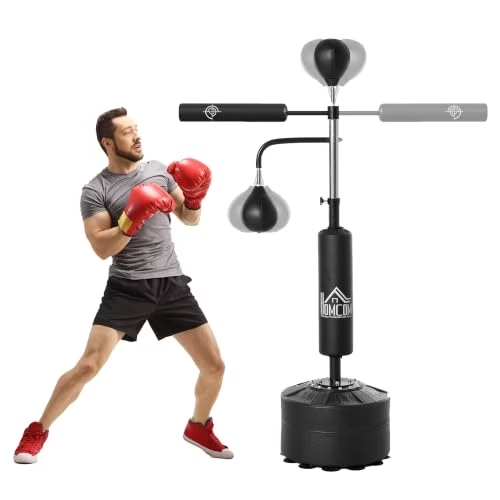
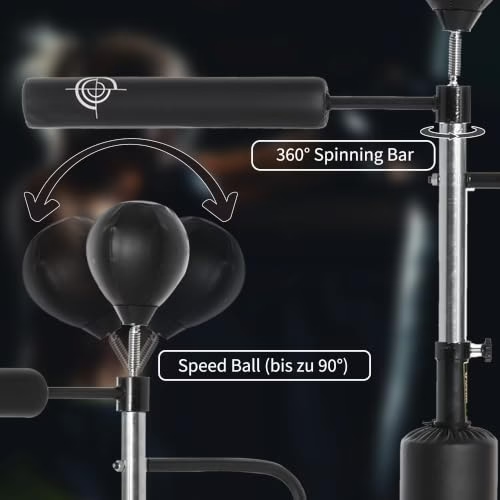
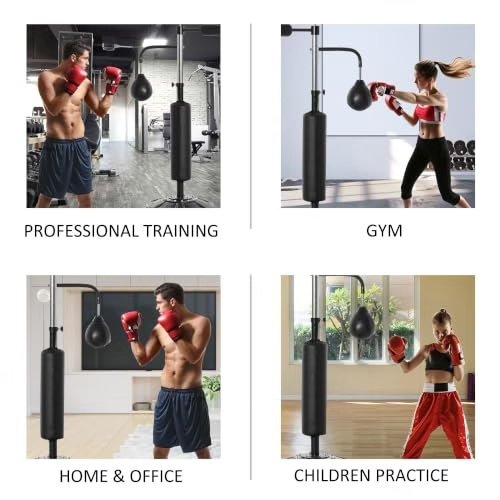
The Soozier 4-in-1 freestanding punching bag combines two speedballs, a 360° reflex bar, and a PU-wrapped boxing bag in one station. The different targets provide options for practicing punching combinations, timing, and hand-eye coordination without installing a hanging bag.
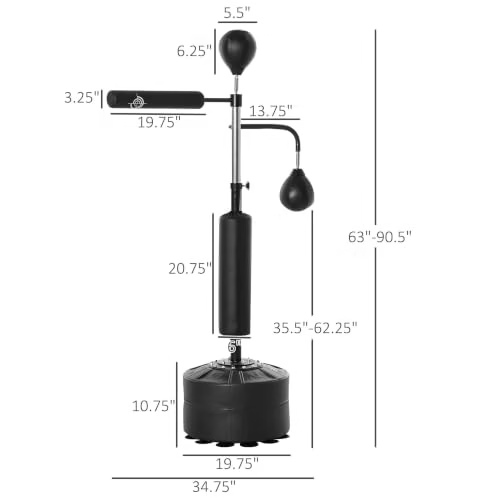
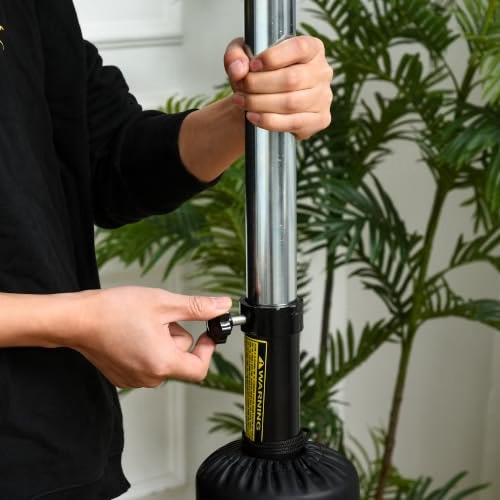
The station adjusts from 63 to 90.6 inches high, allowing its overall height to be changed for different users and training setups. The speedballs and rotating reflex bar offer moving targets, while the boxing bag provides a separate surface for punching drills.
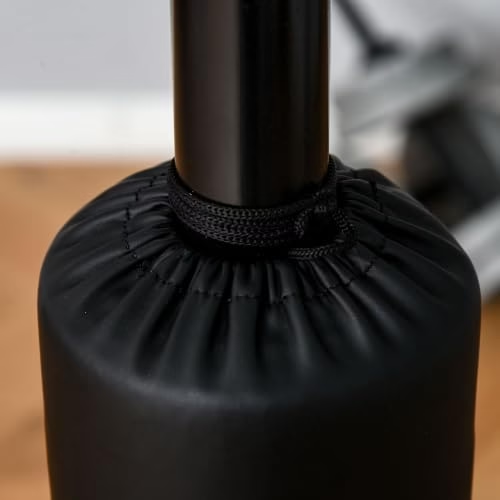
The freestanding base accepts sand, water, or a mixture of both for ballast. Twelve suction cups provide additional grip on suitable flooring. Listed fill capacities are 99 lbs. of sand, 66 lbs. of water, or 88 lbs. of a sand-and-water mixture. The base measures 19.7 inches in diameter and 10.6 inches high, and the station is easier to relocate when the base is empty.
Features
- Two speedballs provide separate targets for timing and punching accuracy drills
- A 360° reflex bar adds a rotating target for coordination practice
- PU-wrapped boxing bag provides an additional striking surface within the station
- Adjustable height ranges from 63 to 90.6 inches for different training setups
- Fillable base accepts sand, water, or a mixture for ballast
- Twelve suction cups provide additional base grip on suitable floor surfaces
Specifications
- Brand
- Soozier
- Model
- A91-120
- Product Type
- Freestanding boxing station
- Color
- Black
- Height Range
- 63"–90.6"
- Speedball Quantity
- 2
- Reflex Bar Rotation
- 360°
- Punching Bag Cover
- PU
- Base Dimensions
- 19.7" diameter × 10.6" H
- Base Sand Capacity
- 99 lbs.
- Base Water Capacity
- 66 lbs.
- Base Mixed Fill Capacity
- 88 lbs.
- Suction Cup Quantity
- 12
- Warranty
- 1 year against manufacturer defects
Soozier Wall-Mounted Speed Bag with Adjustable-Height Steel Platform
Description
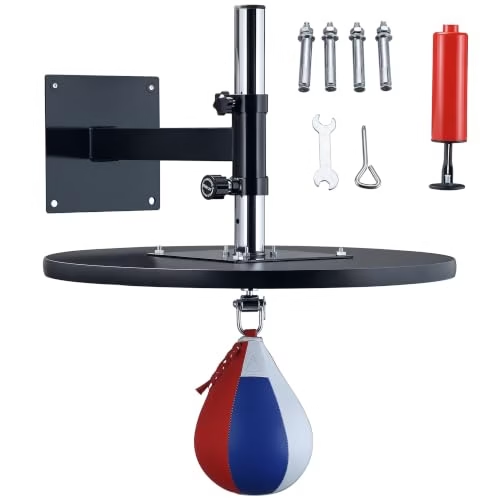
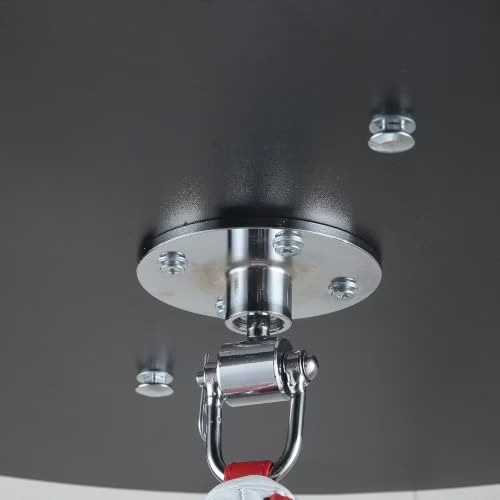
The Soozier wall-mounted speed bag creates a compact boxing practice station for a home gym. It includes a 7-inch-diameter, 9-inch-high speedball and a 23.5-inch-diameter platform for repeated punching drills focused on rhythm, timing, and accuracy.
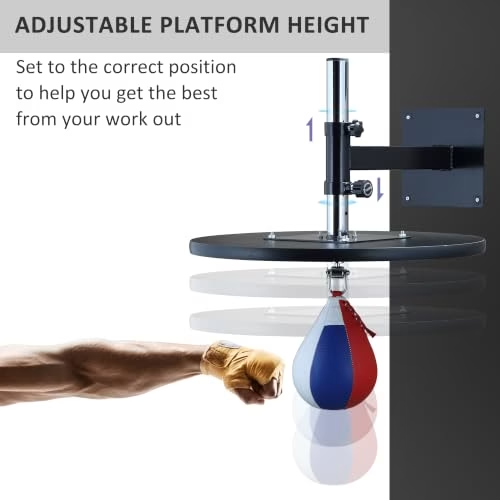
A twist-knob height adjustment allows the bag position to be changed for different users. This provides flexibility in a shared workout space without relocating the wall mount for each person. The supplied listing does not specify the adjustment range.
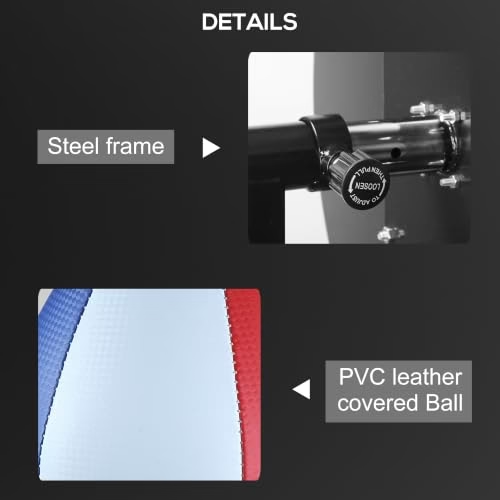
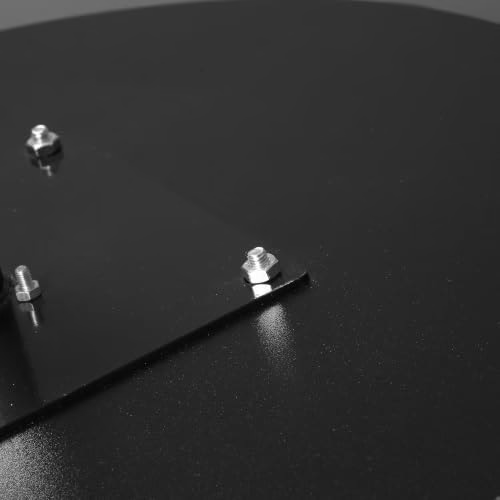
The assembly uses a steel platform with a powder-coated finish, and the speedball has a synthetic leather surface. Wall mounting leaves the floor beneath the station open, although sufficient room is still needed around the bag for practice. Confirm the mounting hardware and wall requirements before installation, as these details are not identified in the supplied information.
Features
- Twist-knob adjustment changes the bag height to accommodate different users
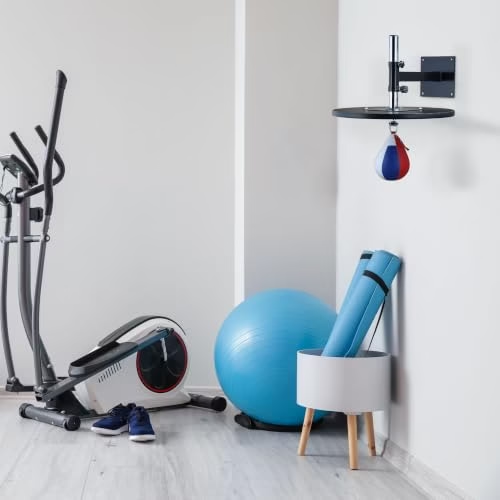
- Wall-mounted design leaves floor space open beneath the training station
- Included speedball provides a target for rhythm, timing, and accuracy drills
- Steel platform has a powder-coated finish for surface protection

Specifications
- Brand
- Soozier
- Part Number
- USA91-2030131
- Product Type
- Wall-mounted speed bag and platform
- Color
- Black, Red, Blue, White
- Platform Material
- Steel
- Platform Finish
- Powder-coated
- Bag Surface Material
- Synthetic leather
- Platform Diameter
- 23.5"
- Speedball Dimensions
- 7" diameter × 9" H
- Height Adjustment
- Twist knob
- Installation Type
- Wall-mounted
- Included Components
- Speedball, platform, wall-mount assembly
How to Start Boxing Training at Home
For a beginner, boxing training should start with stance and movement rather than maximum punching power. Stand in a balanced position with the knees slightly relaxed, hands protecting the face, and enough room to move around the equipment without encountering furniture, walls, or other objects.
Begin with the basic straight punches: jab and cross. Practice returning each hand to its starting position immediately after the punch. Once these movements become comfortable, simple combinations such as jab-cross can be followed by hooks and other techniques appropriate to the user’s experience.
A freestanding punching bag is useful for combining technique with conditioning. Rather than hitting continuously until exhausted, divide training into rounds. A beginner might start with three to five rounds of one or two minutes, with approximately one minute of recovery between rounds. Concentrate on controlled combinations and movement instead of trying to strike as hard as possible.
As conditioning improves, rounds can gradually become longer or more numerous. A common progression is to work toward two- or three-minute rounds while maintaining consistent technique.
The reflex bar serves a different purpose. Instead of absorbing combinations like a punching bag, it encourages the user to react, move the head and body, and coordinate offense with defensive movement. Begin slowly and learn the timing of the returning bar before increasing speed.
Speed-bag training is primarily about rhythm. Beginners often make the exercise unnecessarily difficult by trying to strike too hard. Light, consistent contact and a predictable rhythm are more useful. Short 20–30 second practice periods can be repeated until the rebound pattern becomes familiar.
Heavy-bag training can involve punches as well as appropriate kickboxing techniques, but hands and wrists need suitable protection and correct technique. Boxing gloves and hand wraps should be considered part of the training setup rather than optional accessories for harder bag work.
A Beginner Boxing Workout
A practical home session can begin with five minutes of light movement and mobility. Follow this with several rounds devoted to individual skills: one round of jabs, one of jab-cross combinations, and another combining punches with footwork.
The next section can use the speed bag or reflex bar for shorter intervals emphasizing coordination and reaction. Finish with several controlled punching-bag rounds where previously practiced techniques are combined.
There is no need for every session to be exhausting. A shorter technique session can alternate with more demanding conditioning workouts. This makes boxing equipment useful both for learning movement patterns and for adding higher-intensity activity when desired.
What Can You Train with Soozier Boxing Equipment?
| Your Goal | Best Equipment | Beginner Session | Main Training Focus | Practical Progression |
|---|---|---|---|---|
| Start boxing at home | Freestanding punching bag | 3–5 rounds × 1–2 min | Basic stance, jab, cross and movement | Gradually extend rounds while maintaining technique |
| Improve cardio fitness | Punching bag + reflex station | 5–8 alternating rounds | Continuous movement and repeated combinations | Add rounds before substantially increasing intensity |
| Improve hand-eye coordination | Reflex bar | 20–60 sec intervals | Timing, reaction and controlled movement | Increase speed only after the movement becomes predictable |
| Develop punching rhythm | Speed bag | 20–30 sec intervals | Rhythm, coordination and shoulder endurance | Build longer uninterrupted sequences |
| Practice combinations | Heavy or freestanding bag | 2–3 min controlled rounds | Jab-cross, hooks and combination work | Add movement and more complex combinations gradually |
| Train for kickboxing fitness | Freestanding or heavy bag | Short punch-and-kick combinations | Whole-body coordination and conditioning | Increase combinations rather than simply striking harder |
| Get a full-body workout | Punching bag + footwork | 20–30 min total session | Legs, core, shoulders, arms and cardiovascular work | Alternate technique and conditioning rounds |
| Limited home gym space | Wall-mounted speed bag | Several short rounds | Upper-body coordination and rhythm | Increase training volume without occupying floor space |
| Create a broader boxing station | 2-in-1 heavy/speed bag stand | Alternate heavy and speed bag rounds | Power, rhythm, endurance and coordination | Use each bag for a different training objective |
| Add variety to regular fitness | 4-in-1 station | 15–30 min circuit | Cardio, reactions, striking and movement | Rotate between bag, speed balls and reflex bar |
Choosing Between the Soozier Boxing Setups
The 4-in-1 freestanding station makes the most sense when variety is the priority. A single footprint provides conventional striking practice, speed work, and reflex training, and the empty base makes the unit easier to reposition when necessary.
The wall-mounted speed bag is more specialized. It does not replace a punching bag, but it is useful when the main goals are coordination, rhythm, speed, and shoulder endurance. Because it does not occupy a large area of the floor, it can also complement other home gym equipment.
The 2-in-1 punching bag stand is better suited to users who want to combine a conventional heavy bag with speed-bag practice. It requires more dedicated training space, and the heavy bag itself is separate, but it provides a more traditional arrangement for regular striking workouts.
Whichever configuration is used, stability should be checked before every session. Fillable bases should be properly weighted, wall-mounted equipment needs secure installation into a suitable structure, and weighted stands should remain stable throughout the intended range of movements.
Turn Cardio into a Skill-Based Workout
Traditional cardio can become repetitive because progress is often measured mainly in time, distance, or resistance. Boxing adds another dimension: even a short workout provides something to practice. Punches can become cleaner, combinations more coordinated, speed-bag rhythm more consistent, and reactions to a reflex bar faster.
Soozier boxing equipment makes this kind of training accessible without requiring a permanent boxing gym. A freestanding station provides several activities within one setup, a wall-mounted speed bag uses otherwise unused wall space, and a heavy-bag stand creates a dedicated striking area at home.
For someone who struggles to stay interested in conventional cardio, that combination of physical effort and learnable skills can be particularly useful. The workout is not simply about burning energy—it gives the user a reason to keep moving, repeat a technique, and come back to improve it.